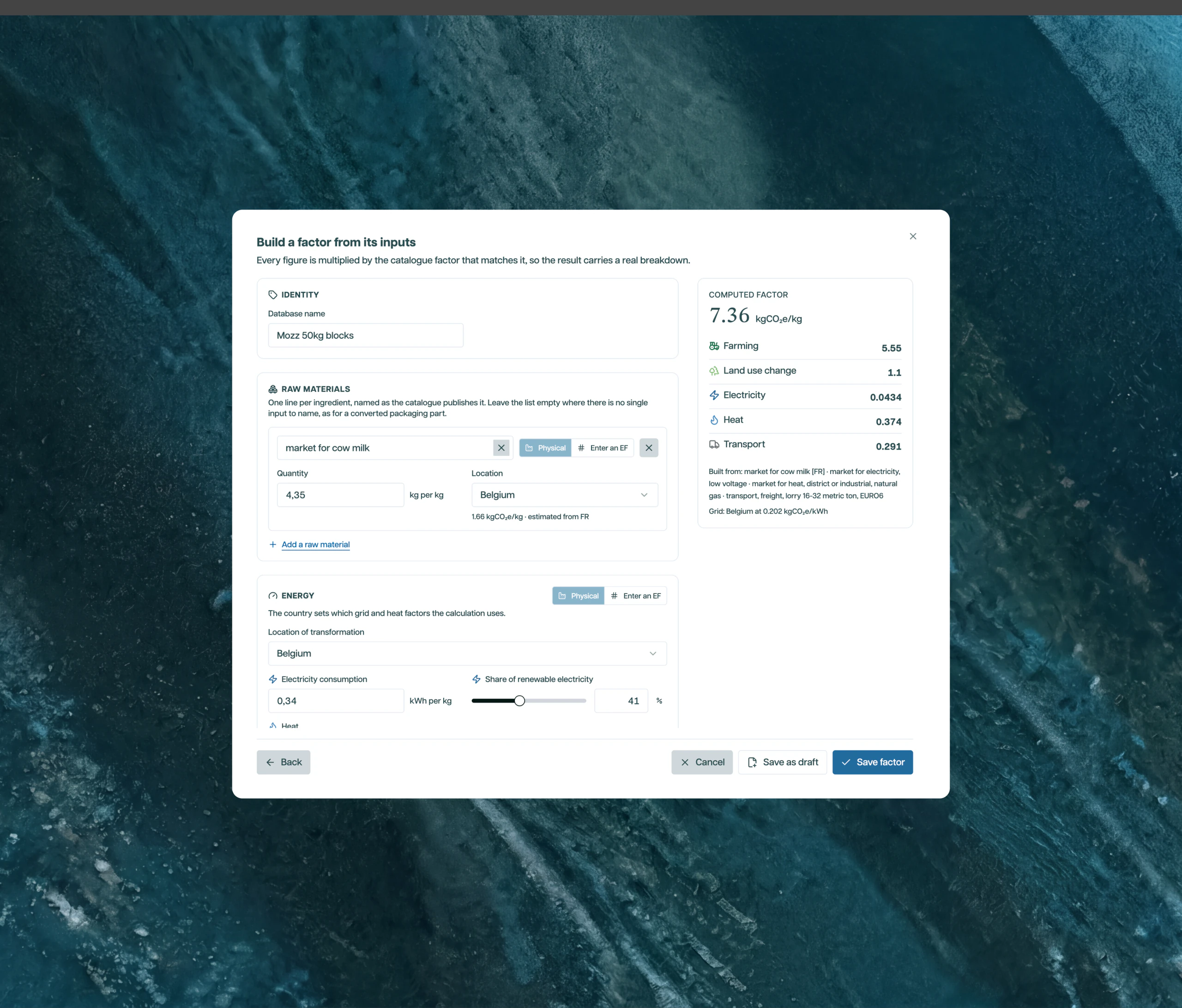
Measure product carbon footprints in line with the EU Product Environmental Footprint rules for dairy, so your numbers are comparable and defensible across Europe.
Bring your own numbers, or build them with us.
Connect your measurement tool
Take the output of your existing carbon measurement tool through an API integration.
Or let us run data collection
Segmos assists with farm and plant data collection and management when no tool is in place.
Report progress, not averages
Track emission-factor updates over time, the way the GHG Protocol Land Sector and Removals Standard expects Scope 3 progress to be shown.
It’s a good place to describe image
Chain of custody
Full traceability of every volume
Mass balance chain of custody, as set out in the dairy sector guidance from the International Dairy Federation and SAI Platform, lets you transfer emission profiles of the milk without full segregation. Segmos runs the inventory: what came in, what was allocated, what went out, and what is left to transfer.
Reconcile inputs and outputs
Proportional allocation over a defined reconciliation period, with full GHG Protocol alignment.
Manage low-carbon inventory
Sustainability and commercial teams have access to available balances, updated live.
Give customers usable claims
Deliver documented emission profiles your buyers can use in their own Scope 3 reporting.
It’s a good place to describe image
Customer allocation
Allocate reductions to the right products and customers
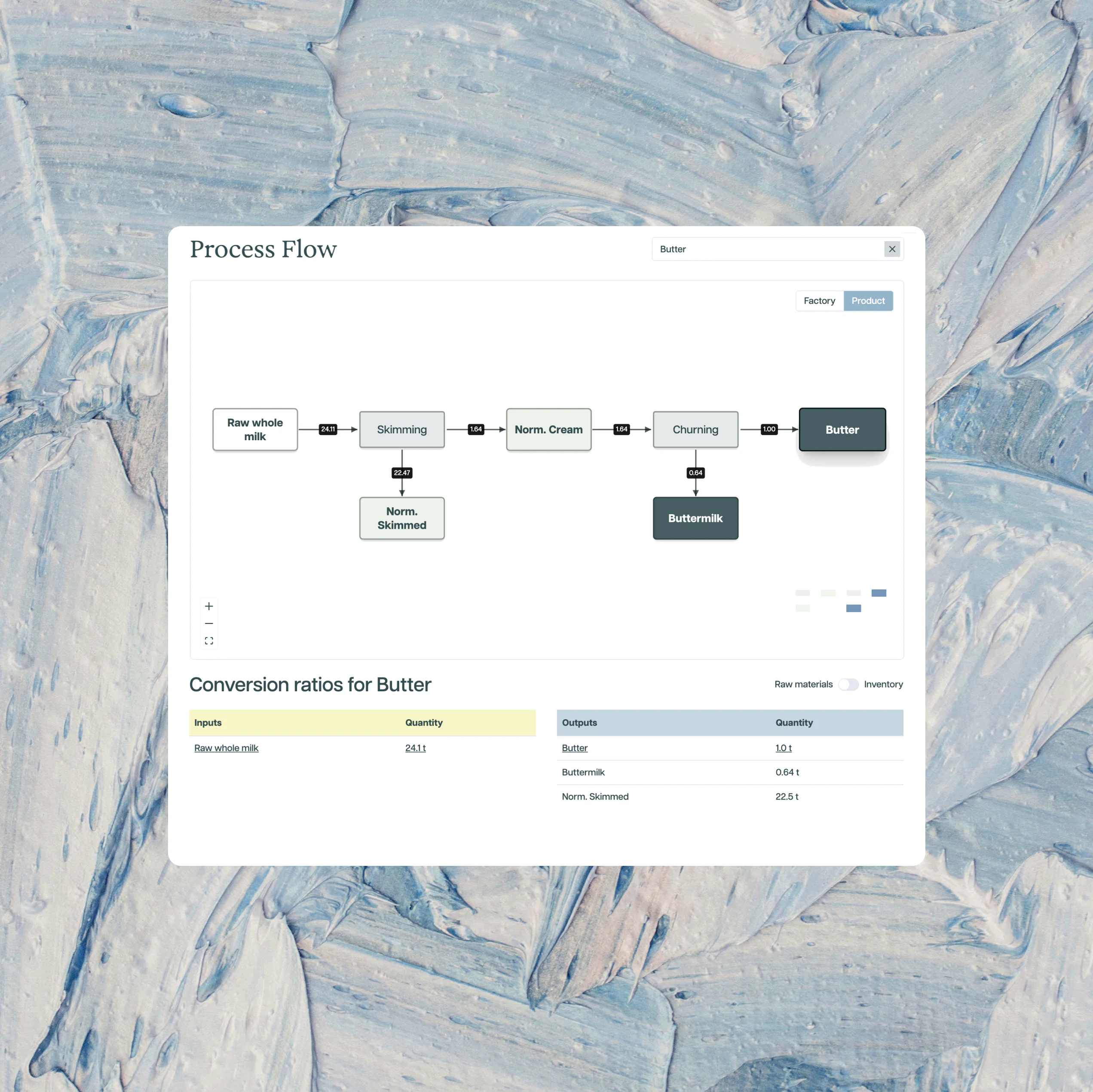
One partner wants low-carbon butter, another wants powder. The same milk footprint has to be split across cream, skimmed milk, butter, buttermilk, powders and whey before it reaches either of them.
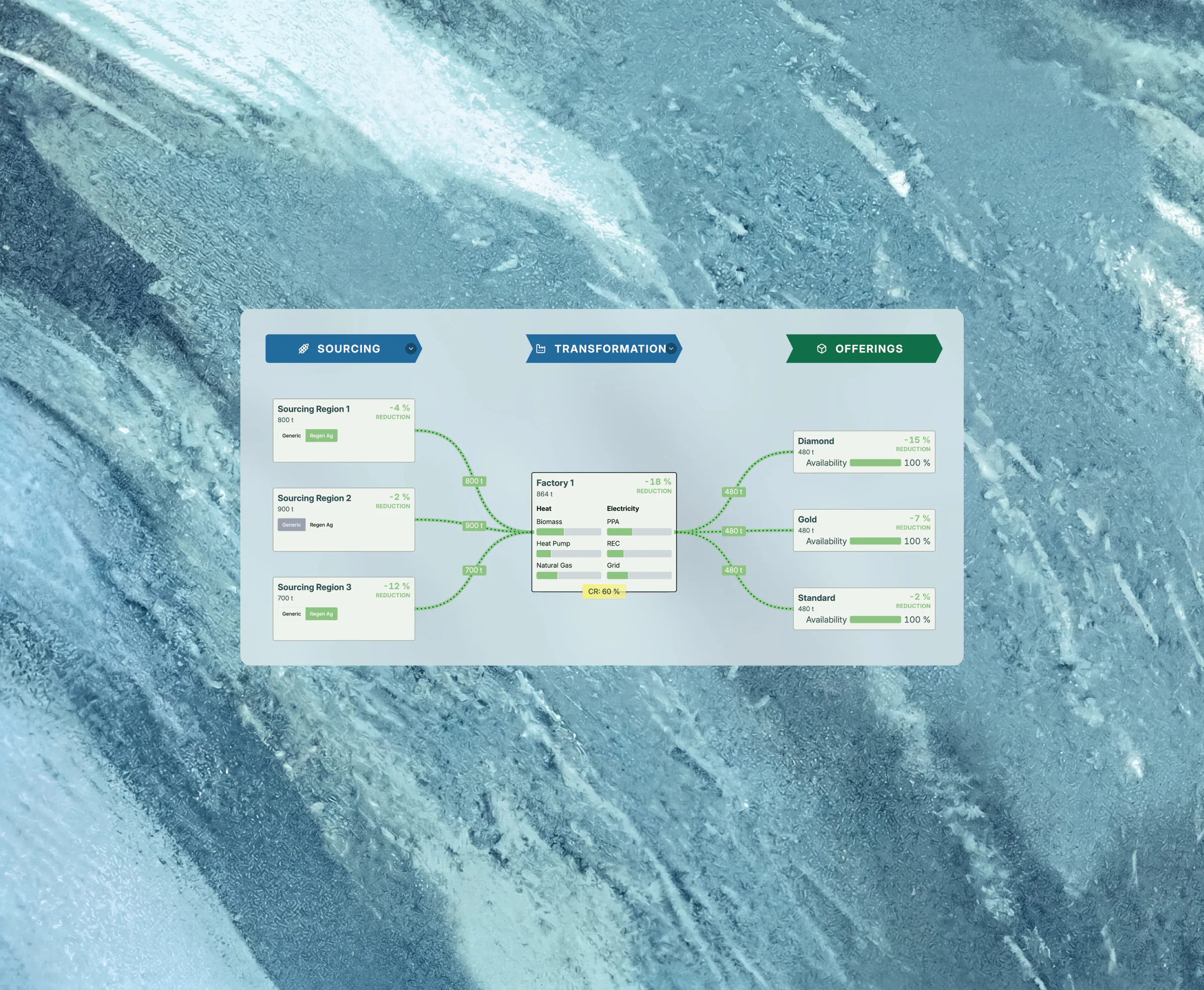
Segmos follows the co-product tree step by step, with deep dairy processing expertise, and books the reduction on the product and the customer that asked for it. Volumes are debited from your inventory, and your other claims stay untouched.
Follow milk through every process
Model skimming, churning, drying and fractionation step by step, with IDF allocation rules.
Serve one customer, one product
Deliver a low-carbon volume for butter, cheese or powder to the customer who requested it, without diluting the rest of your portfolio.
Keep allocation auditable
Every allocation is booked against inventory and reproducible for your auditors and your customers.
Q&A
Questions, answered.
How does co-product allocation work in dairy?
Milk is split into cream and skimmed milk, cream into butter and buttermilk, and so on. Each step allocates the incoming footprint to its outputs using recognised rules such as the IDF allocation guidance. Segmos models these steps so the footprint of each product reflects the real process.
Do we need a carbon measurement tool before starting?
No. Segmos can take the output of your existing tool through an API integration. If you have no tool yet, we assist with data collection and management.
Is mass balance accepted for Scope 3 reporting?
Yes, under defined conditions set by the GHG Protocol Land Sector and Removals Standard: - Inputs and outputs with specified characteristics are known and tracked. - Characteristics are allocated proportionally to outputs. - A reconciliation period is defined. - Mixing stays within the same country and sourcing region.
How do farmer incentive programmes fit in?
Programmes incentives generate reductions at farm level. Segmos carries those reductions through processing and allocation so they reach the products and the customers that pay for them.







.svg)
