.svg)


Sustainability is often discussed in terms of targets, frameworks and reporting, but much of the real challenge sits deeper in supply chains. Improvements are being made on the ground, whether in agriculture, processing or sourcing, yet those improvements are not always visible to the companies that need them most.
This creates a gap between ambition and reality. Companies invest in projects, suppliers make changes, and data is collected, but the connection between those activities and what is actually bought and sold remains unclear. As a result, progress is harder to measure, harder to value and harder to scale.
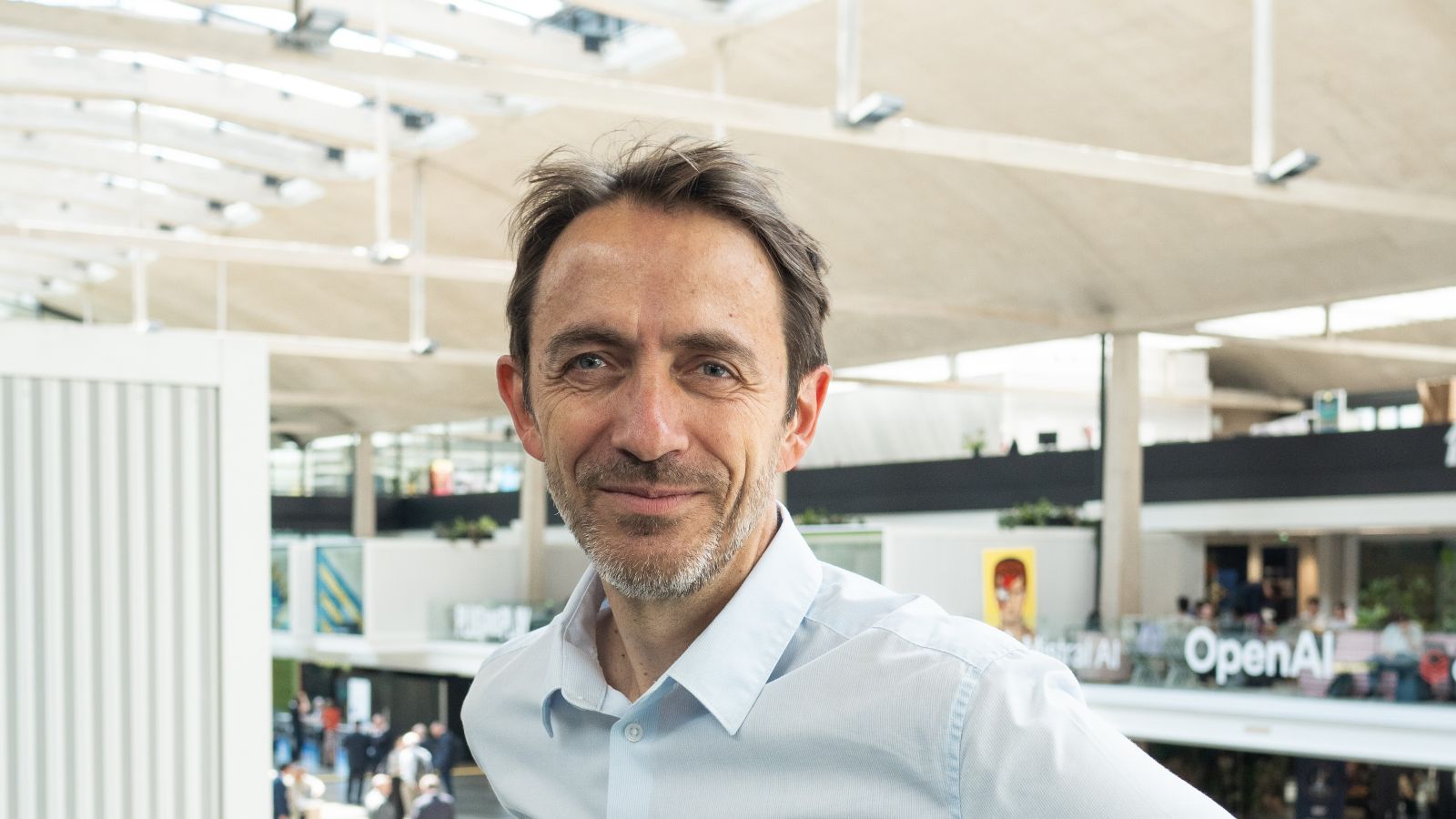
In this conversation, Head of Science Jean-André Bonnardel reflects on his experience working across agricultural supply chains, carbon accounting and traceability systems, and explains why connecting these elements is essential if sustainability is to move beyond reporting and into commercial decision-making.
How did your background shape your view of sustainability?
“I started as an economist with an agronomist background,” Jean-André explains, “ but my main focus shifted toward agricultural development economics. That naturally leads you to look at how value is created and distributed across supply chains.”
That perspective is important. Rather than starting with sustainability frameworks, his approach begins with how markets actually function and how incentives are structured.
“When you look at agricultural systems, the question is not only how to improve practices, but who benefits from those improvements. If value is not captured, the system does not change.”
This framing becomes a recurring theme throughout his work.
What did you see working in palm oil supply chains?
His time in Kuala Lumpur working on palm oil was a turning point.
“We were working on deforestation projects, often funded by large brands, with good intentions and real effort behind them. But there was a disconnect.”
That disconnect was structural rather than operational.
“The projects were not linked to procurement. You could invest in a region, support farmers, reduce deforestation, but there was no clear link between that work and the palm oil being purchased by the brand.”
As a result, the impact remained difficult to capture and ability to claim benefits remains uncertain.
“ That makes it difficult to scale, because the signal is lost.”
Was that disconnect limited to environmental projects?
The identical pattern appeared in carbon.
“At the same time, there was a lot of work happening on Scope 3 emissions, particularly with consulting firms and carbon accounting. But it was happening separately.”
Two systems were evolving in parallel.
“One focused on environmental outcomes in supply chains, the other on measuring emissions. They were often working on the same products, but without a common framework.”
This separation limited both.
“Carbon accounting without traceability relies heavily on averages. Supply chain projects without carbon integration struggle to translate into credible reductions.”
What changed when traceability became part of the picture?
The turning point came with the growing emphasis on traceability.
“With the evolution of the GHG Protocol and increasing scrutiny on claims, the need to link emissions to actual supply chains became clearer.”
This was not a new concept in itself.
“Chain of custody systems have existed for a long time in other areas, such as certified commodities. What was missing was applying that logic to carbon.”
This creates a bridge between two previously separate worlds.
“When you connect traceability with carbon data, you move from abstract measurements to something that can be linked to real flows of goods.”
Why is that connection so important?
Without a clear link to the supply chain, claims become difficult to defend.
“If you cannot show how a reduction relates to what you are buying, you introduce risk. It becomes harder to justify internally and externally.”
That risk is not only reputational.
“It also affects investment. Companies are less likely to invest in improvements if they cannot demonstrate how those improvements will be recognised and used.”
This is where many initiatives slow down.
What role does chain of custody play in solving this?
Chain of custody provides a structured way to maintain that link.
“It ensures that attributes are transferred alongside products through the supply chain, even when physical mixing occurs.”
This does not require full segregation.
“Segregation works in some cases, but it is often too costly and complex at scale. Mass balance chain of custody offers a more practical approach.”
The key is consistency.
“Each actor in the chain has a responsibility to account for what they receive and what they pass on. That creates a continuous link, rather than a disconnected claim.”
How does this change behaviour in supply chains?
One of the most interesting effects is how traceability influences behaviour.
“As soon as a supplier becomes visible through a traceability system, their role changes.
They are no longer part of an anonymous flow.”
That visibility creates accountability, but also opportunity.
“If improvements can be linked to specific volumes, they can be recognised and valued. That gives suppliers a reason to invest.”
Over time, this shifts the system.
“You move from a situation where sustainability is an external requirement to one where it becomes part of how value is created.”
Why is this relevant now?
The timing reflects several converging trends.
“Companies are under increasing pressure to deliver on Scope 3 targets, and at the same time, expectations around data quality and traceability are rising.”
This makes existing approaches less effective.
“Relying on averages or disconnected mechanisms becomes harder to justify. There is a need for something more structured.”
Chain of custody provides that structure.
“It allows companies to connect what happens in the supply chain with what they report and what they buy.”
How does this connect to Segmos?
For Jean-André, Segmos is about putting these elements together.
“What we are trying to do is connect supply chains, carbon data and commercial processes in a coherent way.”
This involves more than tracking.
“It is about enabling transfer systems that allow sustainability attributes to move through supply chains and be used in procurement and pricing.”
That is where the shift happens.
“When sustainability can be integrated into commercial decisions, it starts to scale. It becomes part of how companies operate, not something separate.”
Applying traceability to commercial sustainability
For ingredient suppliers and industrial producers, the challenge is no longer whether to engage with sustainability, but how to make it work within real supply chains.
Segmos helps structure traceability and transfer systems that connect carbon data to physical supply, allowing sustainability attributes to be linked to real volumes and used in procurement, pricing and customer engagement.
If you are looking to understand how traceability can support commercial outcomes and not just reporting, we can help you design systems that make sustainability usable and scalable.