.svg)


Sustainability data is often described as complex, fragmented and difficult to use. For many organisations, the challenge is not just collecting information, but making sense of it across systems, suppliers and processes.
And then applying the standards and frameworks such as ISO 14064 and the GHG Protocol that make it meaningful across all stakeholder groups.
These challenges are not unique to sustainability. Other sectors have been working with large, imperfect and high-stakes datasets for decades, developing ways to structure, interpret and act on them in real time.
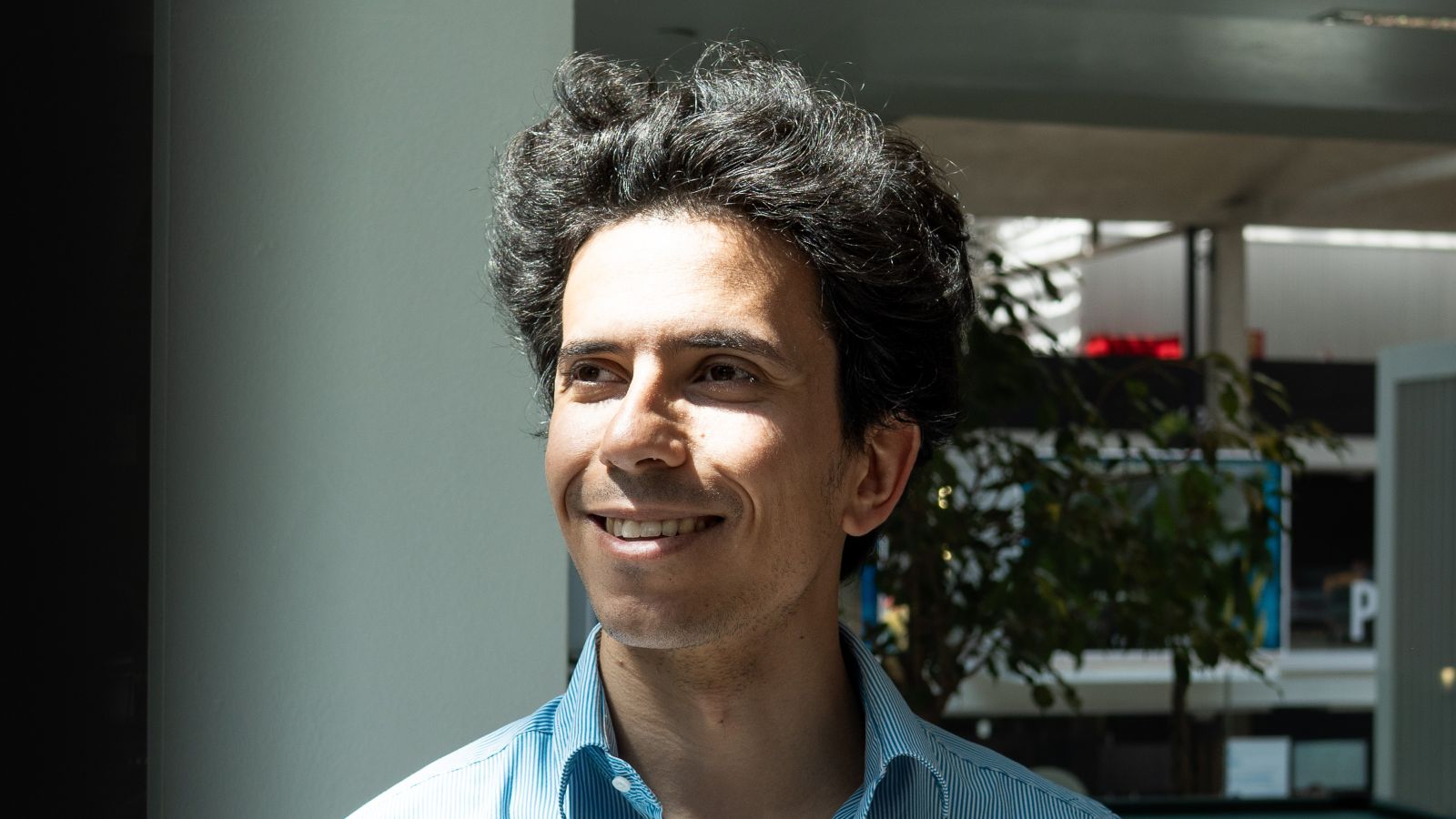
Segmos CTO Eric Askinazi brings that perspective into the sustainability space. With a background in medical data, including work in foetal cardiology, he has spent much of his career working in environments where data is both complex and critical. Today, at Segmos, that same approach is being applied to supply chains and emissions data.
In this conversation, Eric reflects on how data environments mature, what makes them usable, and why sustainability is now reaching a point where it can support real operational decisions.
How did your interest in complex data environments begin?
“I started programming quite early,” Eric explains. “I was building things when I was around twelve, small systems, trying to understand how everything connected.”
That early curiosity developed into a focus on solving problems that were not immediately obvious.
“What interested me was always the same question. You have a system, you don’t fully understand it, and you need to find a way to make it work.”
That mindset led him towards environments where data plays a central role.
What drew you into healthcare and medical data?
Healthcare presented a different level of complexity.
“When you work with medical data, especially in something like foetal cardiology, the level of detail is very high. You are working with signals, images, multiple data sources, all of which need to be interpreted correctly.”
The consequences of getting it wrong are also very different.
“You don’t have the option to ignore inconsistencies. You have to find a way to bring everything together and make a decision.”
That requirement shapes how systems are built and how data is handled.
What does a mature data environment look like in practice?
In more established domains, maturity is not defined by perfect data.
“People often imagine that in healthcare everything is clean and structured. It’s not. The data is messy, just like in any company.”
What changes is how that data is managed.
“You have systems, you have processes, and you have a shared understanding of what the data represents. That allows you to work with it, even if it is not perfect.”
The focus shifts away from cleaning every dataset and towards building a framework that can support consistent interpretation.
How does that compare with sustainability data today?
The similarities are closer than they first appear.
“When you look at sustainability data in companies, you see the same patterns. Different systems, different formats, different levels of detail.”
The difference has been in structure.
“For a long time, there was no common way of measuring or organising it. Everyone was doing it slightly differently.”
That lack of alignment made it difficult to compare data or use it beyond reporting.
What has changed in recent years?
A more consistent framework is beginning to emerge.
“Now you have shared methodologies. Scope 1, Scope 2, Scope 3. People understand what those mean, even if implementation is still evolving.”
At the same time, the volume of available data is increasing.
“You have more sources, more tools, more ways of collecting information. The question is how to bring it together.”
This combination of structure and availability is what begins to move a system towards maturity.
Do companies need perfect data before they can act?
Eric is clear on this point.
“No system is perfect. If you wait for perfect data, you never move forward.”
The focus is instead on building something that is usable.
“You need enough structure to compare, enough consistency to trust the results. After that, you improve over time.”
This reflects how other sectors have evolved. Systems are refined as they are used, rather than completed in advance.
How important is domain knowledge in working with data?
Technical skills alone are not enough.
“If you don’t understand the domain, you don’t understand the data.”
In healthcare, that might mean working closely with clinicians. In sustainability, it involves understanding how supply chains operate in practice.
“You need to get to the level of the expert. Otherwise you are just moving numbers around without knowing what they represent.”
This is often where progress accelerates. Once data and domain knowledge are connected, it becomes possible to improve both.
What attracted you to working on sustainability?
The underlying problem was familiar.
“It’s the same kind of challenge. You have complex systems, incomplete data, and a need to make decisions.”
At the same time, the context is different.
“In sustainability, the systems are still being built. That makes it interesting. You are not just applying existing models, you are helping to define them.”
That combination of familiarity and uncertainty is what drew him to Segmos.
How do you approach solving these kinds of problems?
The approach is pragmatic.
“At the beginning, you often don’t know exactly how to solve the problem. You explore, you test, you try to understand where the constraints are.”
Over time, patterns begin to emerge.
“You find ways to structure the data, to simplify the system without losing what matters.”
That process is iterative. It relies on working within real environments rather than designing systems in isolation.
What does impact look like in this context?
Impact is not defined by theoretical improvements.
“You can have a very good solution that works in isolation, but if it is not adopted, it doesn’t change anything.”
Scale matters.
“If you can improve something slightly across a large system, the effect is much bigger than a perfect solution that only a few people use.”
This perspective shapes how solutions are designed. They need to fit within existing operations, not replace them entirely.
What does this mean for sustainability going forward?
Sustainability data is moving towards a stage where it can be used more actively.
“There is enough structure now to start doing more with it. It’s not only about reporting anymore.”
As systems mature, the role of data changes.
“You can use it to guide decisions, to optimise processes, to understand where the differences are.”
That shift is gradual, but it is already underway.
Applying sustainability data in real supply chains
As sustainability data becomes more structured, the challenge for ingredient suppliers and industrial producers is how to apply it within existing operations. Data needs to move beyond reporting and support decisions across sourcing, production and customer engagement.
Segmos works with complex supply chains to structure and connect sustainability data with operational reality. By linking data to physical flows and making it accessible to commercial teams, it becomes possible to use it in procurement, pricing and supply allocation.
If you are looking to understand how sustainability data can be applied in practice, and how it can support real commercial decisions, Segmos helps turn complex datasets into usable systems.